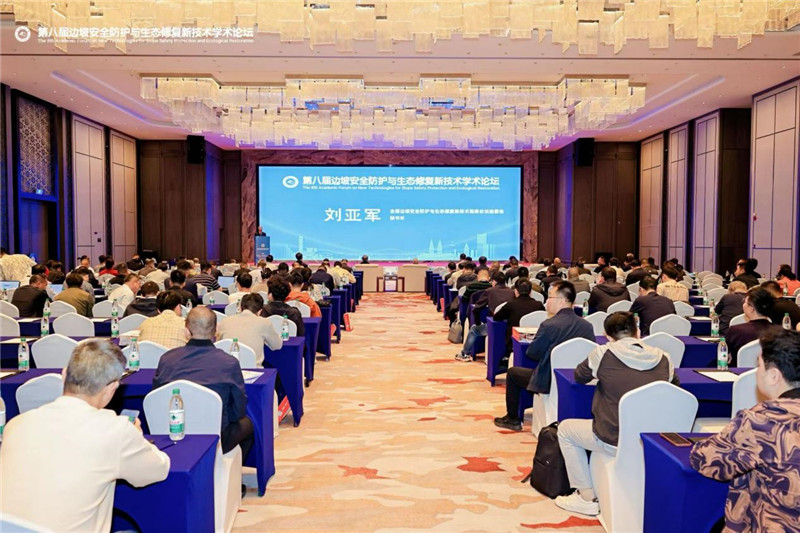
On October 22, the 8th National Academic Forum on New Technologies for Slope
Safety Protection and Ecological Restoration was held in Chongqing. The forum
was co-hosted by Southwest Jiaotong University, the Road Engineering Branch of
the China Highway & Transportation Society, and others, bringing together
more than 300 experts and scholars from fields such as geotechnical engineering
and geological disaster prevention and control.
During the conference, industry authorities including Pan Jiangyang, Deputy
General Manager and Chief Engineer of PowerChina Zhongnan Engineering
Corporation Limited, and Jiang Shuping, National Engineering Survey and Design
Master, successively visited the OST booth, where they closely observed the
digital sandbox system and the full-process service model, and spoke highly of
them.

(Pan Jiangyang, Deputy General Manager and Chief Engineer of PowerChina
Zhongnan Engineering Corporation Limited)
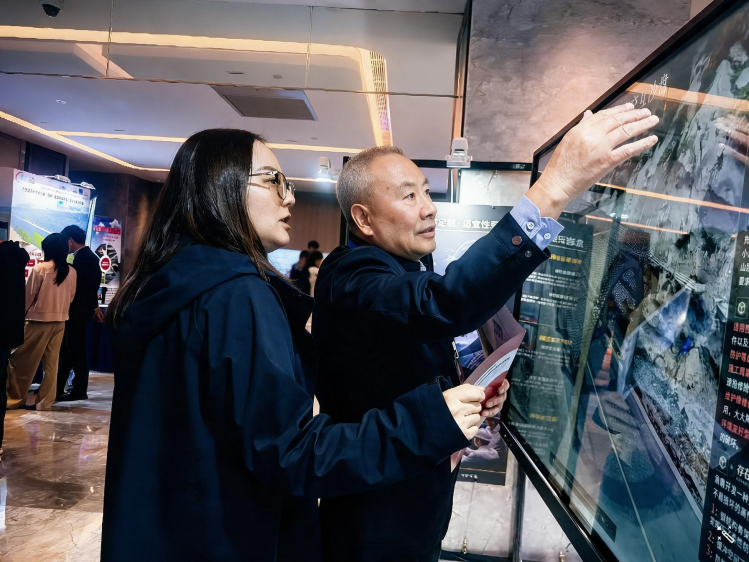
(Jiang Shuping, National Engineering Survey and Design Master)
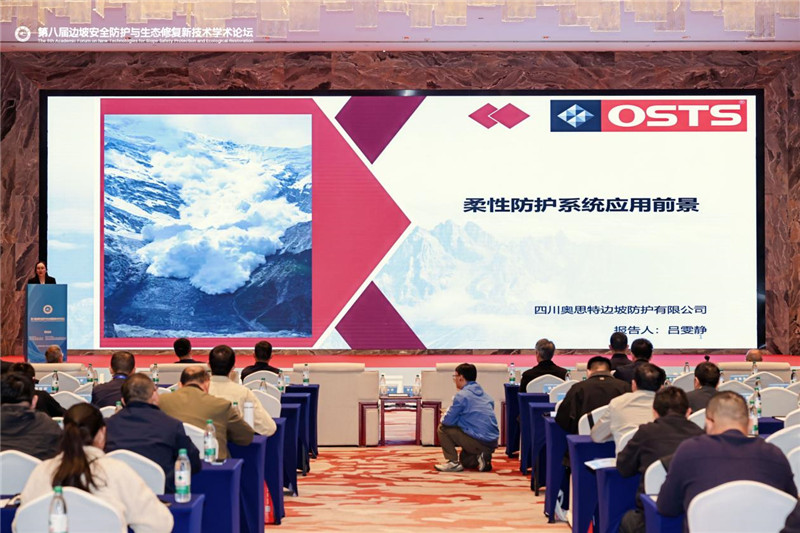
Lü Wenjing, General Manager of Sichuan OST Slope Protection Engineering Co.,
Ltd., was invited to attend the forum and delivered a keynote report, presenting
OST's professional solutions to industry pain points and cutting-edge
technologies.
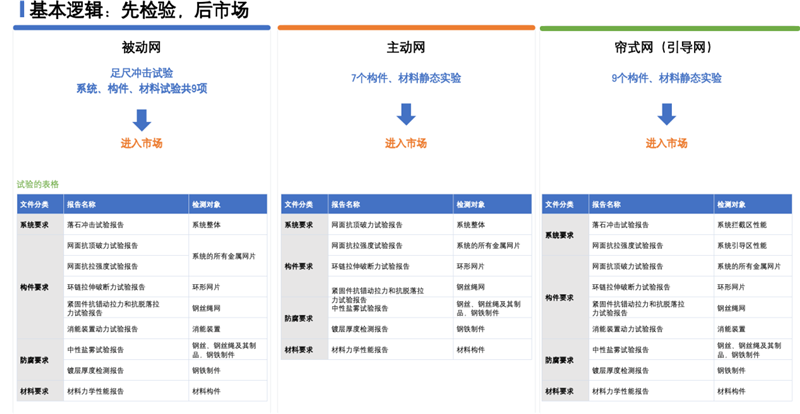
01 Breaking Through Industry Challenges: How Can Slope Protection
Engineering Quality Achieve "Inspection First, Market Second"?
The industry still faces issues such as falsified reports and cutting
corners, which have caused some protection projects to fall short of
expectations. Addressing the pain point of "how to conduct acceptance inspection
for engineering quality," Lü Wenjing clearly stated at the conference that the
key to implementing standards lies in the acceptance inspection process.
OST's approach to breaking through this challenge is "inspection first,
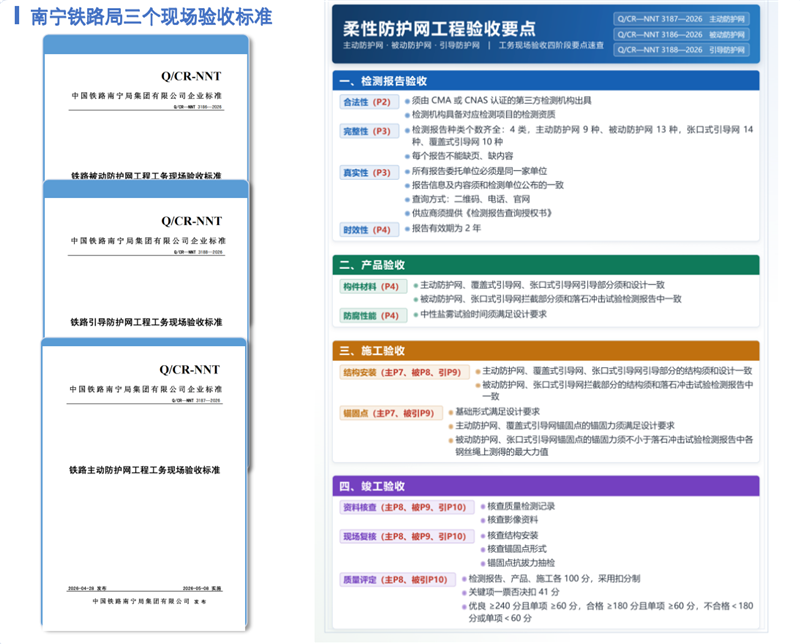
market second." This year, OST assisted the Nanning Railway Bureau in
implementing three on-site acceptance inspection standards, and drawing on the
mature mechanism of "owner-led acceptance inspection" from the Hong Kong Civil
Engineering and Development Department, it has integrated inspection throughout
the entire process—from testing reports and product entry to construction and
completion—driving the industry to form a rigid closed loop.
02 Debris Flow Protection: How to Solve the Challenge of Blockage Caused by
High-Level Hidden Debris Flows?
Affected by the northward shift of rainfall belts, debris flows are
changing from rare disasters to high-frequency disasters. In particular,
high-level hidden debris flows along transportation routes are highly prone to
blocking flood discharge channels, causing water to overflow onto roads.
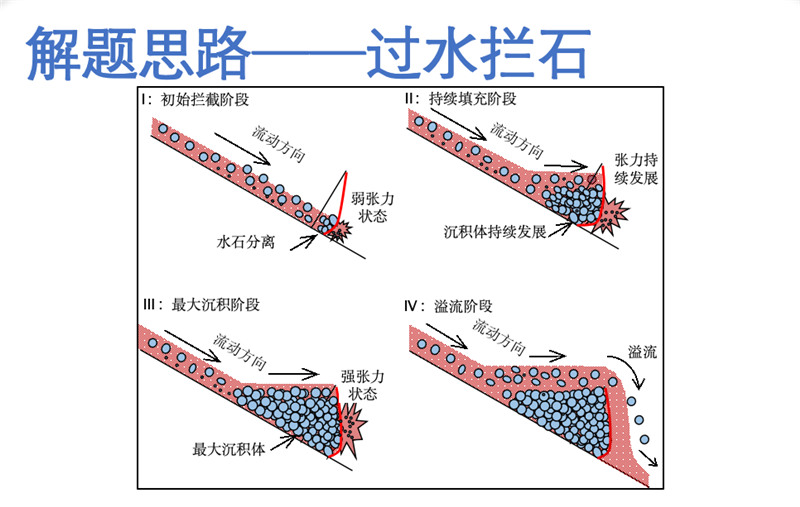
Solution: Let water pass while blocking rocks. OST's flexible debris flow
barriers are lightweight and fast to install. The core logic is to "let water
pass while intercepting large foreign objects," ensuring unimpeded flood
discharge.
Standard Initiative: In response to the current gap in China regarding
verification standards for flexible debris flow barriers, Lü Wenjing called at
the conference for promptly benchmarking against the foreign EAD standards and,
grounded in China's disaster prevention practices, establishing design methods
and product acceptance standards for debris flow barriers.
· Can ordinary passive protection nets be used?
Conclusion: Absolutely not.
Avalanches involve large-volume, high-frequency continuous impacts. About
70% of the energy absorption of traditional passive nets relies on
energy-dissipating components. Once these components are activated, only 30% of
the energy level remains, which is simply unable to cope with the successive
avalanche impacts.
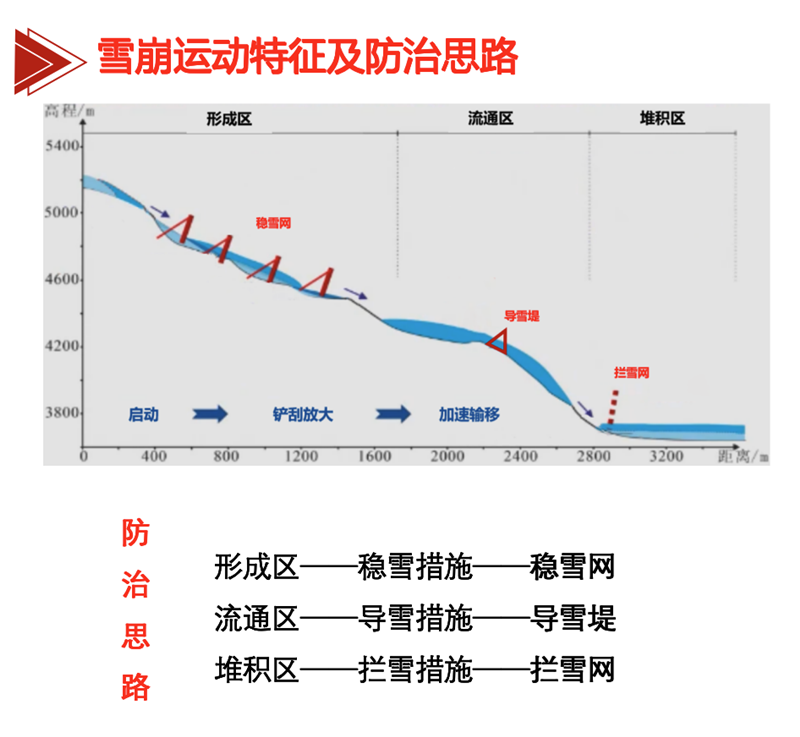
· Solution: Three-zone prevention and control. Based on the common mechanism
of "energy absorption and dissipation" of flexible nets, OST has finalized its
series of snow stabilization nets and snow interception nets:
Formation zone: Deploy snow stabilization nets to suppress avalanche
occurrence;
Transport zone: Adopt snow diversion measures to redirect the flow away
from protected points;
Deposition zone: Deploy snow interception nets to intercept the avalanche
body.
· 04 High and Steep Rockfall: How to Prevent Rockfall in Places
Inaccessible to Personnel?
When dealing with high-level, high-energy hazardous rocks, manual removal
and traditional anchoring often involve extremely high construction safety
risks.
· Solution: Control, guidance, and energy dissipation. Taking the Lixiang
Railway Hutiaoxia Jinsha River Railway Bridge project as an example, in response
to the challenges of steep and high mountains and the high risk of on-site
manual surveys, OST, in collaboration with China Railway Eryuan Engineering
Group, used UAV aerial surveying and 3D rockfall trajectory analysis software to
accurately obtain key parameters such as rockfall trajectories and bounce
heights.
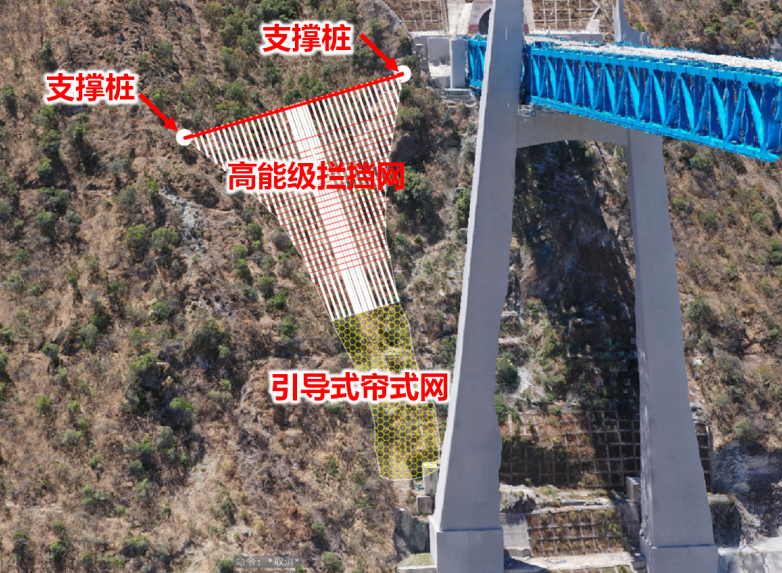
· Project implementation: The project innovatively adopted a new curtain-type
protection system consisting of "piles + main cables + nets." The lower net body
of the system is not anchored to the mountain, achieving interception and
guidance through the principle of "overcoming hardness with softness." Its
protection energy level reaches 12,000 kJ, more than five times that of ordinary
protection nets, successfully breaking through the maximum energy level of
traditional structures and building an ultra-high-energy safety barrier for the
railway bridge.
05 Booth Highlights: From a Single Product to a "Full-Process Slope Safety
Service Provider"
"Qualified materials do not equal qualified structures, and qualified
structures do not equal satisfactory application results."
Based on this deep understanding, OST has formally established its
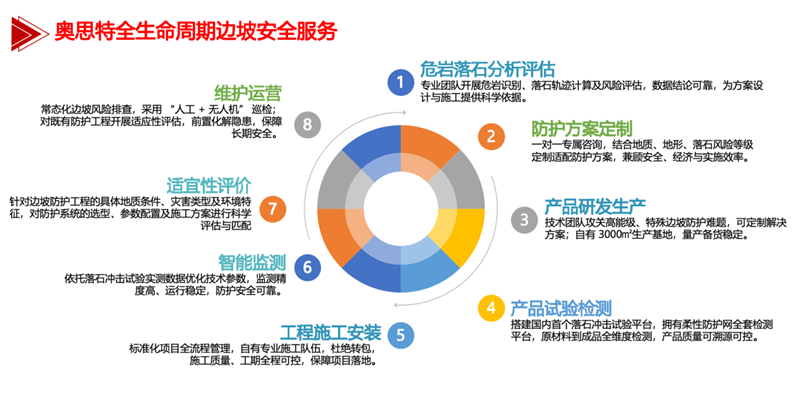
positioning as a "Full-Process Slope Safety Service Provider." Its services
cover eight stages: dangerous rock and rockfall analysis and assessment,
customized protection solution design, product research and production, product
testing and inspection, engineering construction and installation, intelligent
monitoring, suitability evaluation, and maintenance and operation.
At the booth, the 3D digital sandbox system attracted many representatives who
stopped to observe. Through dynamic perspectives, the sandbox intuitively
recreated disaster scenarios and protection engineering layouts for hydropower
stations and highway slopes, making complex protection principles clear at a
glance.
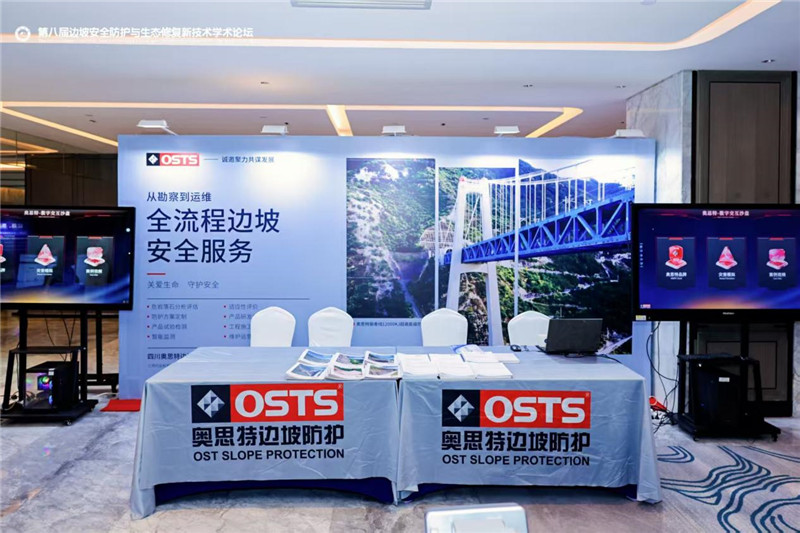
From product manufacturing to full-process services, OST has always upheld
its commitment: Care for Life, Safeguard Safety.
OST Slope Protection | Full-Process Slope Safety Service Provider