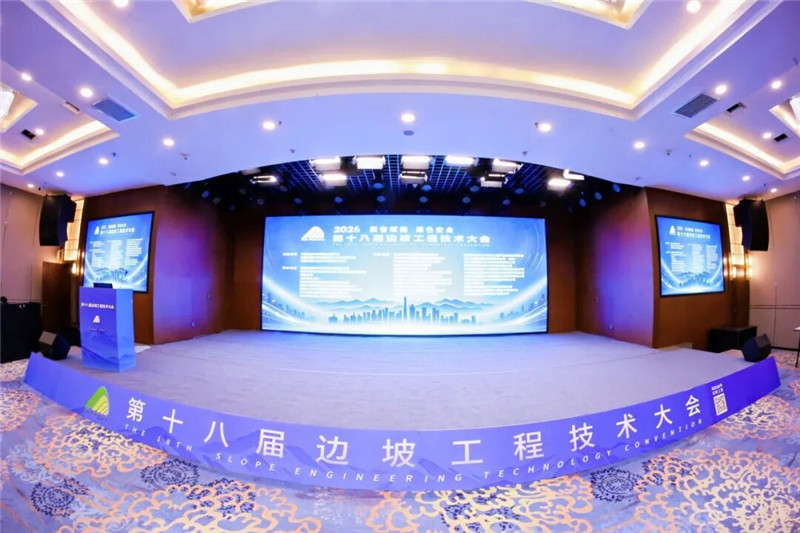
From September 16 to 19, 2026, the 18th Slope Engineering Technology
Conference was held in Urumqi.
The conference was hosted by the Road Engineering Branch of the China
Highway and Transportation Society, the Xinjiang Uygur Autonomous Region Society
for Rock Mechanics and Engineering, and the Xinjiang Uygur Autonomous Region
Survey and Design Association. The team led by Academician Wang Shuangjie of the
Chinese Academy of Engineering attended the conference.
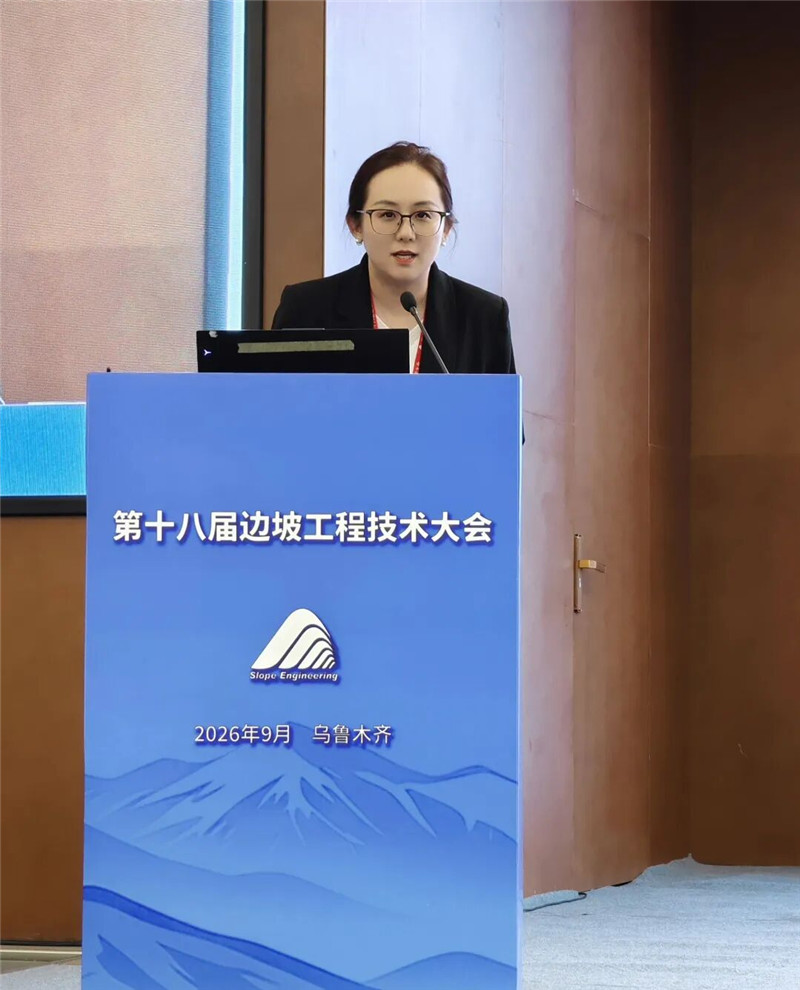
Sichuan OST Slope Protection Engineering Co., Ltd. was the only company
among the organizers of this conference dedicated to the research and
development of slope protection technology and product manufacturing. The
company's General Manager, Lü Wenjing, was invited to give a report titled
"Application Prospects of Flexible Protection Systems."
From 0 to 1: A Twenty-Year Journey Toward Technological Self-Reliance
After the 2008 Wenchuan earthquake, a large number of protective structures
collapsed, failing to perform their intended function. After conducting on-site
investigations abroad, the OST team found that geological conditions at home and
abroad differ significantly, with a technological gap of about 60 years.
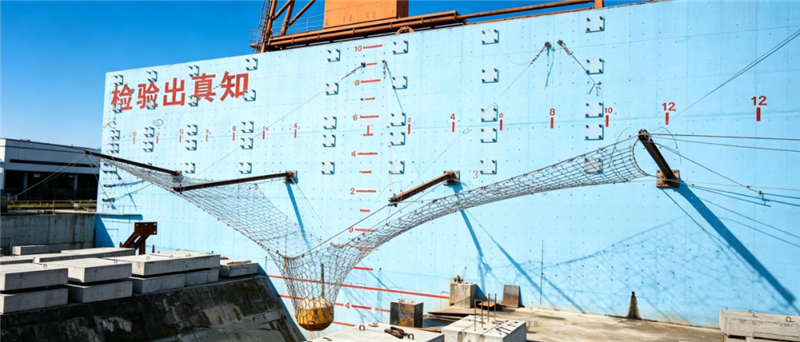
Questioning the 2004 version of the standard, the OST company built China's
first rockfall impact testing platform to carry out verification tests. The
results showed that the compliance rate of protection performance was only
20%–30%, proving that the 2004 interim standard was inadequate.
Afterward, OST joined hands with Southwest Jiaotong University, Chengdu
University of Technology, and other universities to carry out more than a decade
of systematic research, spanning from rockfall mechanism studies to component
material research, and from structural research to impact mechanics. Through
countless full-scale experiments and multiple field in-situ tests, the team
continuously collected data and, combined with finite element simulation, raised
calculation accuracy to over 90%.
From trial-and-error experimental research and development to a scientific
R&D approach combining theoretical analysis, finite element calculation, and
experimental verification, Aosite achieved a technological breakthrough from 0
to 1.
防护能级从:
750kJ(1995年)
↓
5000kJ(2015年)
↓
12000kJ(2023年 超高能级)

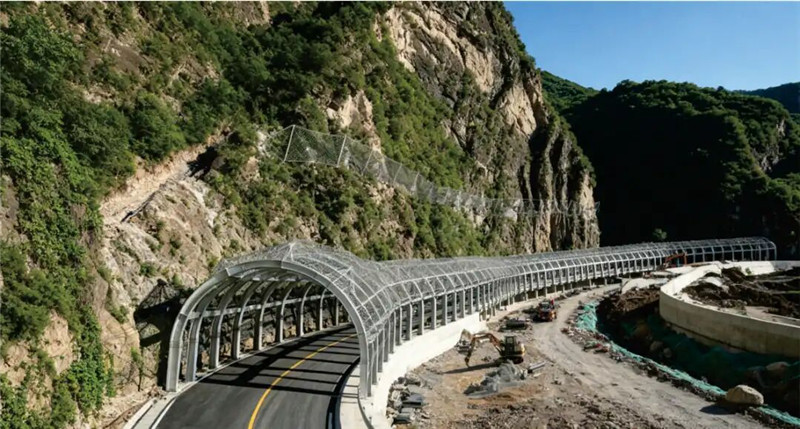
Behind these figures lies not only an increase in energy levels but also a
revolution in protection philosophy—shifting from the traditional concepts of
"stabilization" and "interception" to an adaptive approach of "control,
guidance, and energy dissipation." On this basis, OST developed a curtain-type
guidance net system (1,000 kJ to 12,000 kJ) and a high-performance flexible rock
shed (2,000 kJ), expanding its application scenarios from hazardous rock
treatment to debris flows, avalanches, and other fields.
· Industry standards that OST participated in formulating:
• Slope Flexible Protection Net System (JT/T 1328-2020), Ministry of
Transport
• Test Method and Evaluation for Rockfall Impact of Railway Slope Flexible
Passive Protection Products (TB/T 3449-2016), National Railway
Administration
• Technical Code for Slope Flexible Protection Net Engineering of
Hydropower Projects (NB/T 11807-2025), National Energy Administration
· Technology accumulation data:
• One of only three companies worldwide with a comprehensive Mastery of
flexible protection technology
• Cumulative research investment exceeding RMB 142 million
• More than 300 full-scale impact tests completed
• More than 80 patents
The first keyword: Full-process slope safety services
After achieving technological self-reliance, OST began to consider a deeper
question: Does a qualified component equal a qualified system? Does a qualified
system equal satisfactory application results?
Flexible protection is not a single product but a systematic engineering
endeavor integrating structural mechanics, materials science, and impact
mechanics. Its application requires the coordinated linkage of a series of
supporting processes, including survey, design, production, construction,
inspection, and operation and maintenance.
This means that doing a good job on the product alone is not enough.
Whether the upstream geological assessment is accurate, whether the midstream
solution design is well-matched, and whether the downstream construction and
acceptance are properly carried out—every link affects the final safety
outcome.
Based on this judgment, OST proposed a new positioning this year:
"Full-process Slope Safety Service Provider."
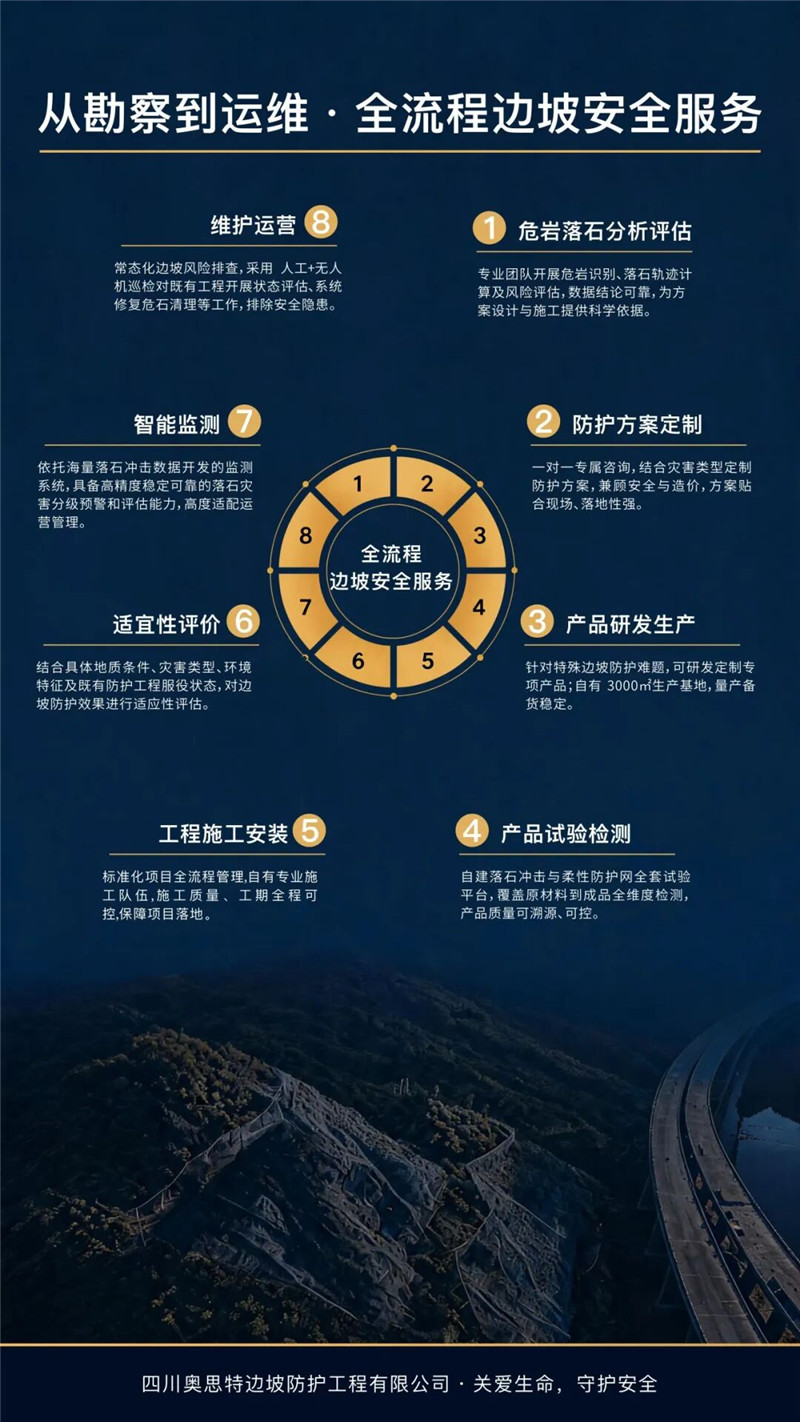
Hazardous rock and rockfall analysis and assessment → Customized protection
solution design → Product research, development, and manufacturing → Product
testing and inspection → Engineering construction and installation → Intelligent
monitoring → Suitability evaluation → Maintenance and operation
From preliminary geological hazard assessment, to the formulation of
technically feasible, practical, and cost-effective solutions, and then to
construction acceptance and later operation and maintenance—OST is transforming
from a "factory selling protection nets" into a service provider covering the
entire life cycle of slope safety.
The second keyword: New achievements in avalanche protection
The report presented OST's latest progress in the field of avalanche
prevention and control.
One thing needs to be clarified first: avalanche protection and rockfall
protection are two different things.
Rockfall is a disaster form characterized by small volume and high impact
energy, whereas avalanche is a disaster form characterized by continuous impact
and large volume. Once the energy dissipator of a traditional passive protection
net is activated, it consumes most of its energy capacity, leaving only about
30% for the next interception. In the face of avalanches—a high-frequency,
large-volume disaster—the traditional passive net format is inappropriate.
OST studied foreign technical manuals and relevant standards for avalanche
prevention and control, and learned from the mature experience of other
countries in this field.
The prevention and control approach is divided into three zones:
• Formation zone → Snow stabilization measures, which suppress avalanche
occurrence by altering the shear weak surface of the avalanche body
• Flow zone → Snow diversion measures, which manage avalanche disasters by
redirecting the flow
• Deposition zone → Snow interception measures, which manage avalanche
disasters by interception

基于柔性防护网“吸能耗能”的共通机理,公司已完成稳雪网、拦雪网系列产品的计算分析与定型。稳雪网布设于形成区,抑制雪崩发生;拦雪网针对高频发、小规模、广分布的雪崩灾害,布设于堆积区前端,具备易清理和易维修的优势。
这意味着柔性防护技术的应用边界,正在从传统的落石、泥石流,拓展到雪崩这一高海拔山区常见灾害场景。
Based on the common mechanism of "energy absorption and dissipation" of
flexible protection nets, the company has completed the calculation, analysis,
and finalization of its snow stabilization net and snow interception net product
series. Snow stabilization nets are deployed in formation zones to suppress
avalanche occurrence; snow interception nets, targeting high-frequency,
small-scale, and widely distributed avalanche disasters, are deployed at the
front end of deposition zones and offer the advantages of easy cleaning and easy
maintenance.
This means that the application boundaries of flexible protection
technology are expanding from traditional rockfall and debris flow scenarios to
avalanches, a common disaster scenario in high-altitude mountainous areas.
The digital sand table at the exhibition booth
During the conference, OST demonstrated its [Digital Sand Table System] at
its exhibition booth.
Starting from real disaster scenarios, the sand table presents various
slope protection application scenarios—from hydropower stations to highway
slopes, from passive nets to guidance nets, and from rockfall to debris
flow.
Unlike brochures or pictures, visitors can use a 3D perspective to view the
positional relationships of products in real terrain from multiple angles, and
can also watch the dynamic effects of simulated disaster scenarios. On-site
staff provide explanations alongside the demonstration.
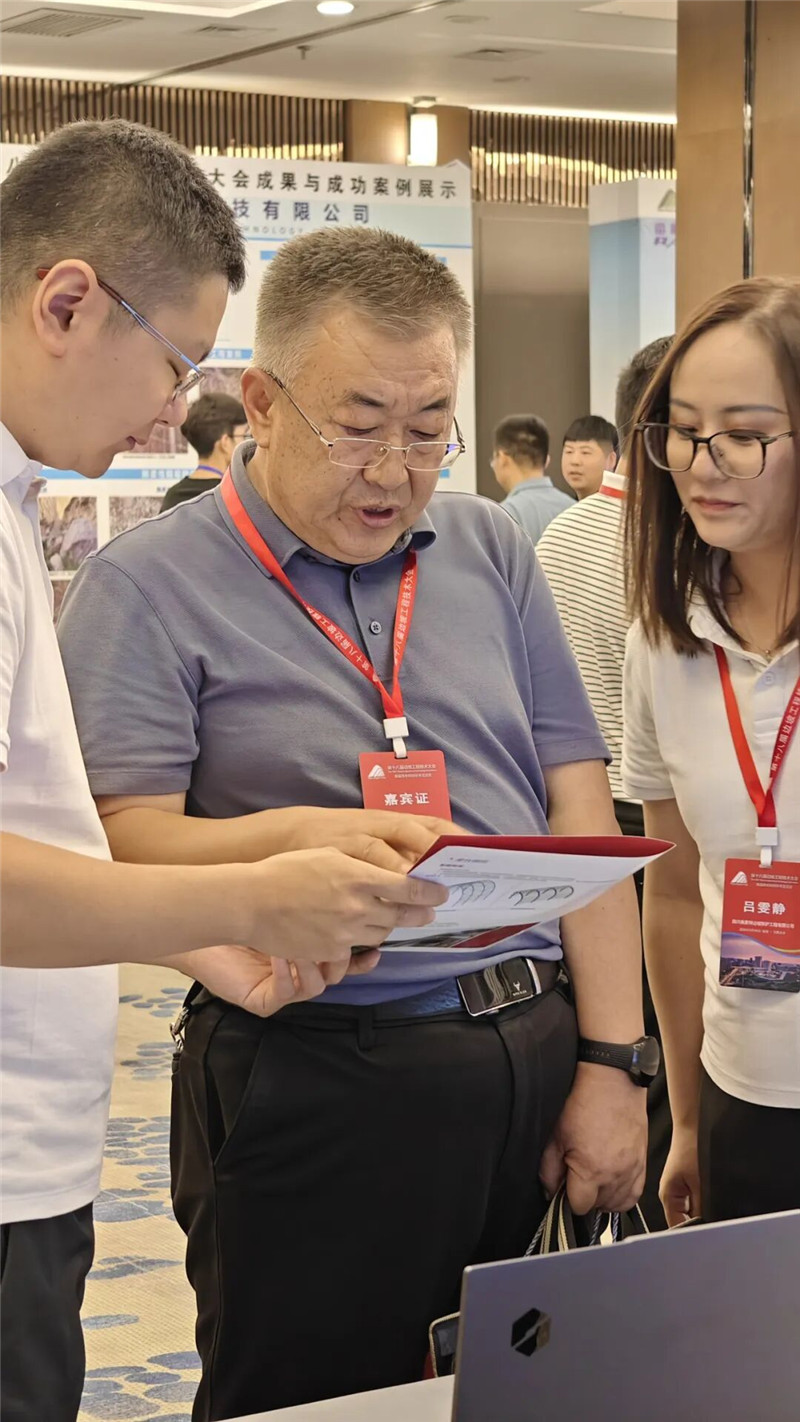
After the report concluded, many conference delegates came to the booth and
engaged in discussions around the sand table demonstration and product details.
Some visitors remarked that the sand table is more intuitive than brochures or
pictures—they could see the application scenarios and product features, and also
observe product conditions and disaster simulation effects from dynamic
perspectives.
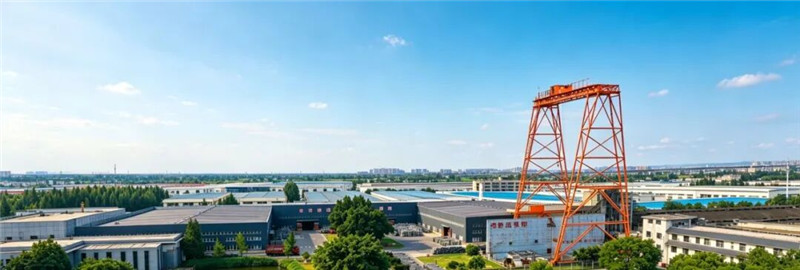
From 750 to 12,000—the distance from catching up to leading.
From rockfall to avalanche—a leap from a single scenario to multi-scenario
adaptability.
From selling products to full-process services—a transformation from
supplier to service provider.
What OST does remains unchanged: Care for Life, Safeguard Safety.
OST Slope Protection · Full-process Slope Safety Service Provider
Care for Life, Safeguard Safety